We Built fora Living.Now WeBuild for Life.
We spent twenty years building the infrastructure a country depends on. Now we're building what the land depends on — wildflower meadows, pollinator habitats, and real connections between communities and the living world.
Where concrete ends, life begins
Three women. Decades of building.
One decision to build something living.
We have spent the best part of twenty years on-site — rail stations, motorway upgrades, water infrastructure, the kind of projects that quietly shape how a country moves. We were good at it. We still are.
There's a version of this story where construction and nature are opposites. We've never quite believed that. The attention, the patience, the refusal to leave things half-done — those instincts don't belong to any one industry. At some point, we turned them toward the land.
Between the sites and the spreadsheets, we've never stopped being grateful for one thing — childhoods spent mostly outside. Muddy, exploring, hands in the soil and spirits properly wild. Not every child gets that now. They're growing up with their attention pointed inward, toward digital worlds built from blocks and badges, endlessly compelling and endlessly forgettable. We've seen what happens when you take them somewhere real instead — out to a meadow, close to a hive, among things that hum and flower and don't have a loading screen. The phones disappear. The quiet arrives. Something in them opens up that no screen ever reached.
“They'll never remember the level they unlocked. But they will always remember the first time they touched a bumblebee.”
Project Delivery
Decades managing complex, high-stakes programmes — on budget, on time, at scale. We know how to make things happen in the real world.
Land & Ecology
Deep knowledge of land management, environmental compliance, and biodiversity net gain — built from years working alongside ecologists and regulators.
Community & Stakeholders
Experienced in working with landowners, local authorities, utility companies, and communities. We know how to bring people with us.
Not in a sustainability strategy. Not in a PDF nobody reads. On the ground. With our hands. Using the skills we actually have.
Building with nature, not around it
Community Apiaries
Managed beekeeping sites supporting pollinator populations and wildflower biodiversity. Courses from complete beginner to advanced.
Target: Year 1: 6 hives across 2 sites, 30 course participants
Habitat Restoration
Wildflower meadows, hedgerow planting, hedgehog highways, barn owl boxes, and deer monitoring. Connecting corridors along linesides, watercourses, and community land.
Target: Year 1: 5 acres restored, 200m hedgerow planted
Free School Visits
Structured outdoor learning for nurseries and primary schools — animal care, food growing, wildlife identification. Free and accessible to SEND children and low-income families.
Target: Year 1: 500 children, 12 schools visited
Biodiversity Monitoring
Systematic data collection using UK Pollinator Monitoring Scheme (PoMS) FIT Counts, transect walks, and water quality sampling. Records submitted to national databases under the Environment Act 2021.
Target: Year 1: Monthly FIT Counts at all sites, baseline species list
Community Farm
Establishing community farms on underutilised land — buffer zones, lineside corridors. Growing plots, small livestock, and integrated wildlife habitat areas.
Target: Year 2: Secure first land access agreement
Mobile Bee Museum
A travelling bee museum bringing VR technology and immersive sensory experiences to schools across the region. Children experience the hive from inside.
Target: Year 2: Prototype built, 5 school pilot visits
Community Gardens
Creating public ecological gardens as spaces for relaxation, learning, and connection with nature — for children, families, and anyone experiencing isolation.
Target: Year 2: 1 community garden established
Research & Biogenetics
Collaborating with universities to explore conservation genetics and modern ecological methods. Including apitherapy — studying health benefits of pollen and bee products.
Target: Year 3+: University partnership secured
From our fields, not a stock library
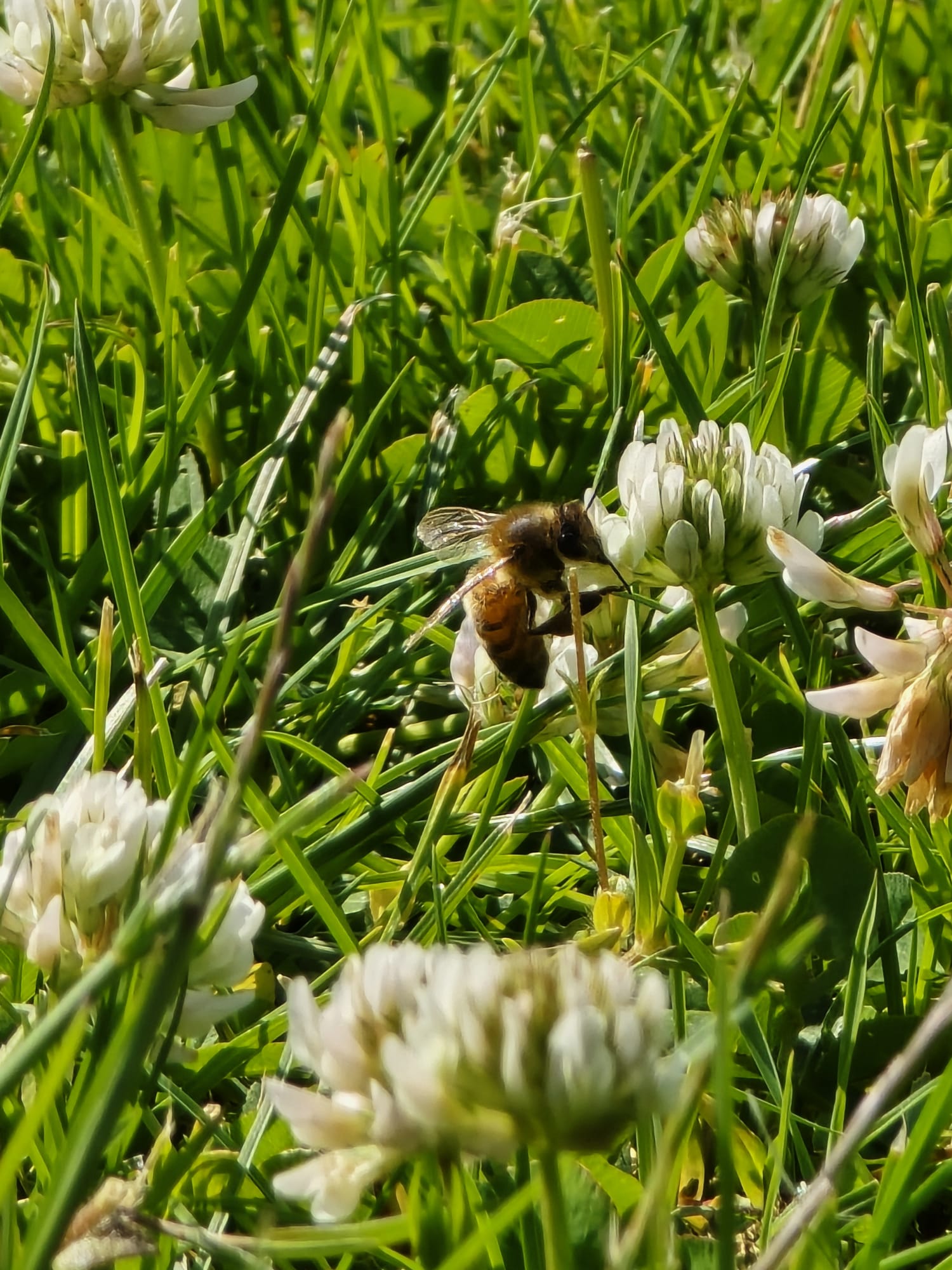
Pollinator at work
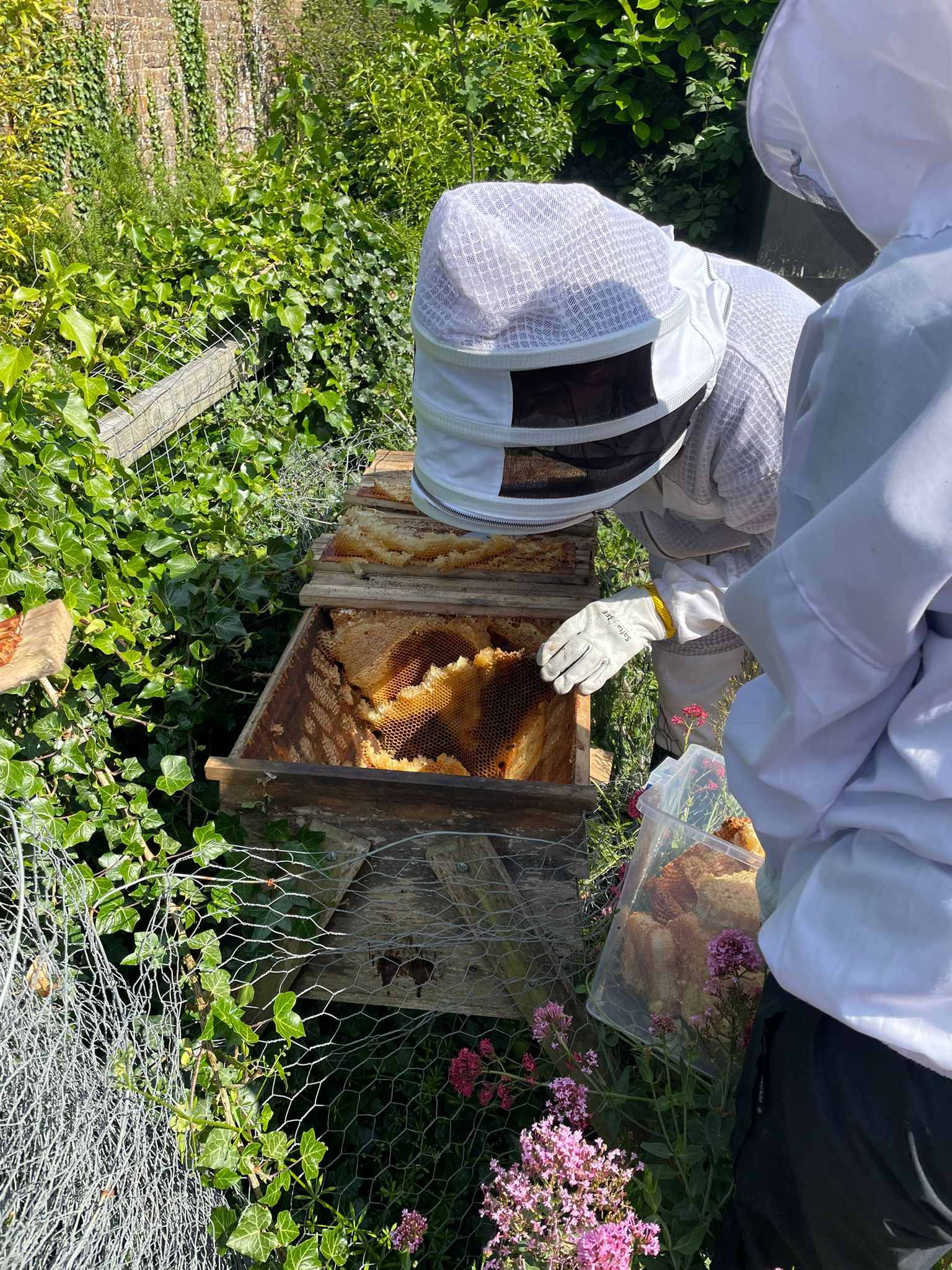
Volunteering with the local beekeeping community — this top-bar hive hadn't been opened in three years.
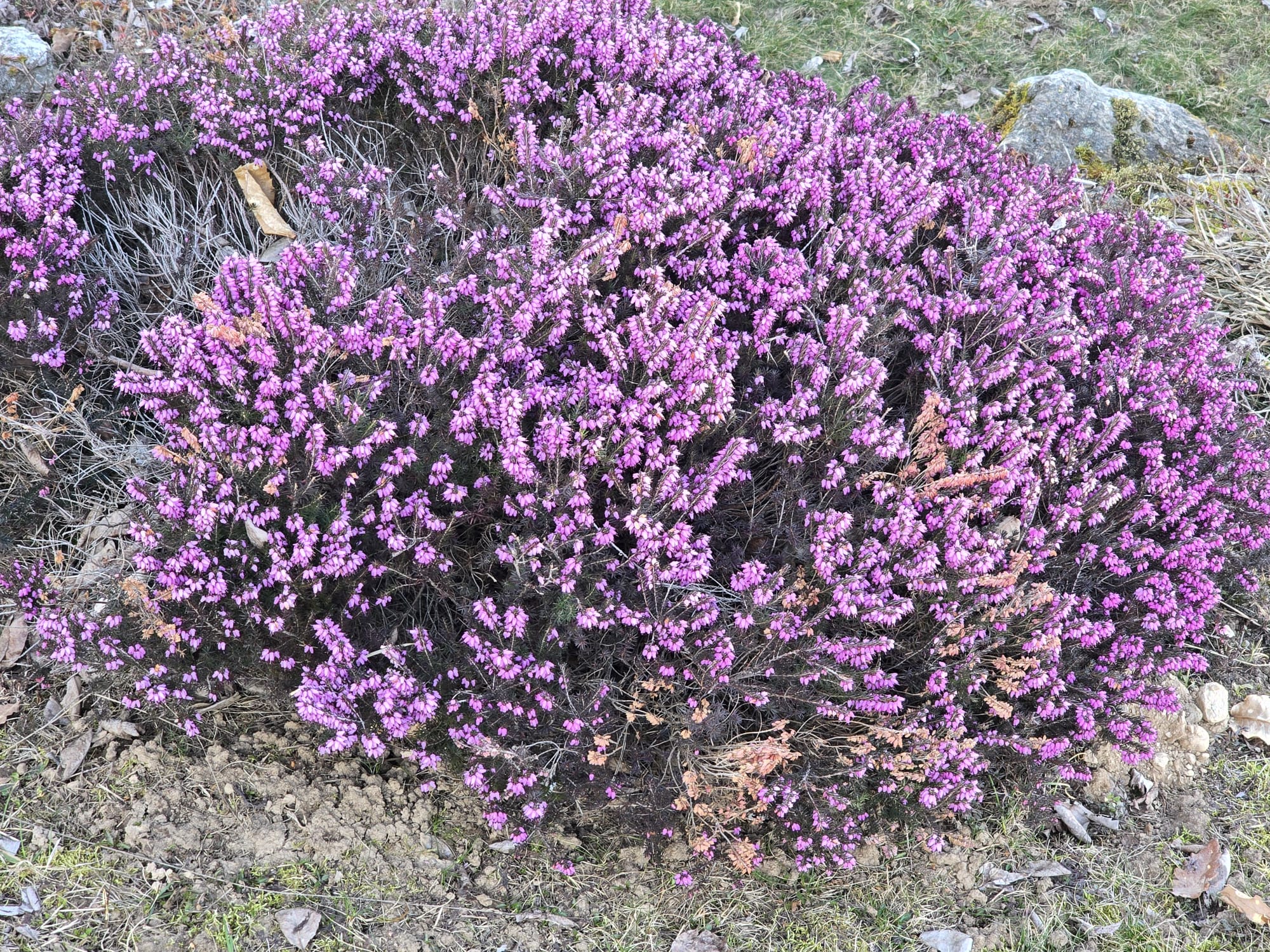
When everything flowers at once
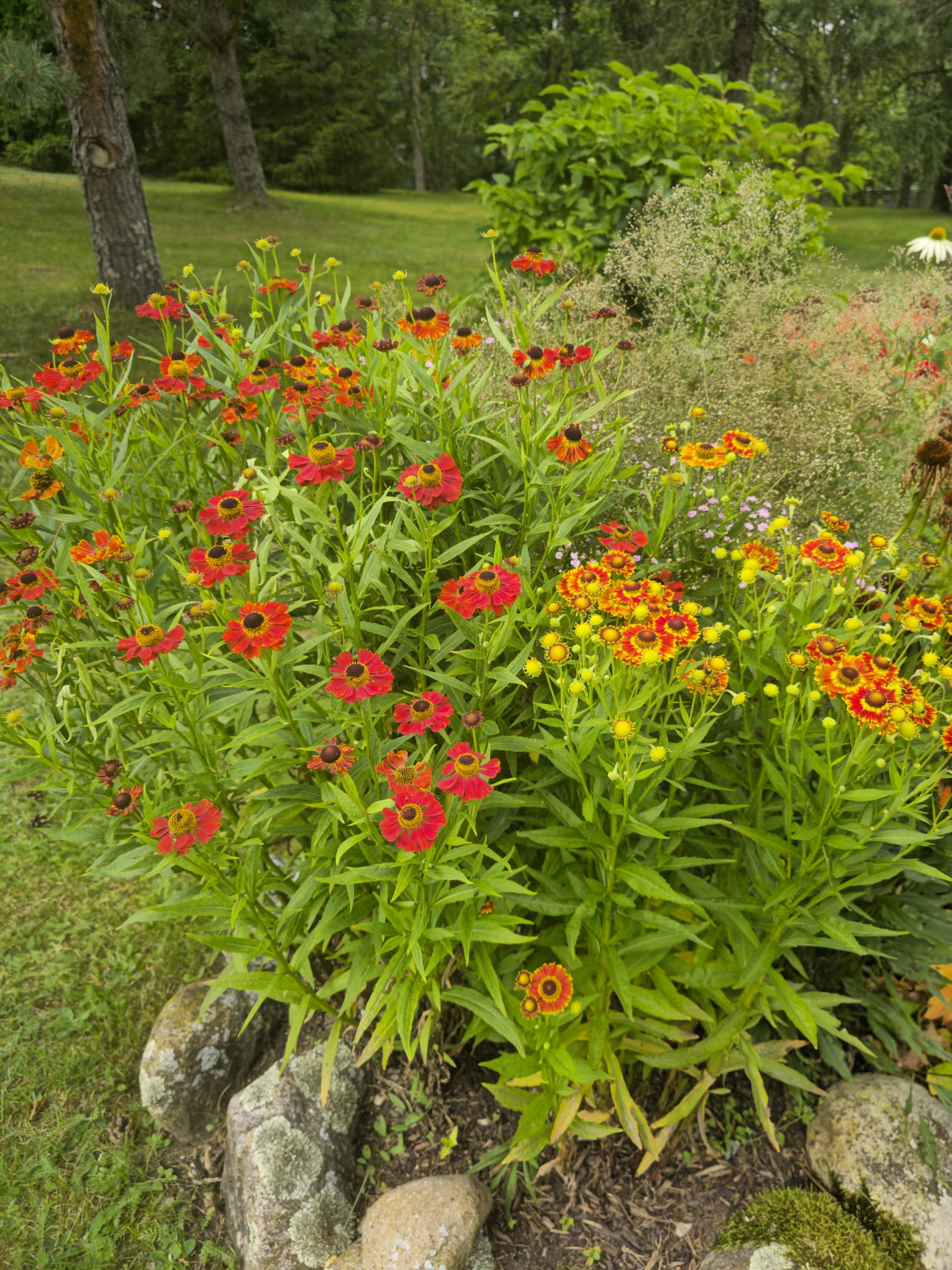
Our wildflower garden
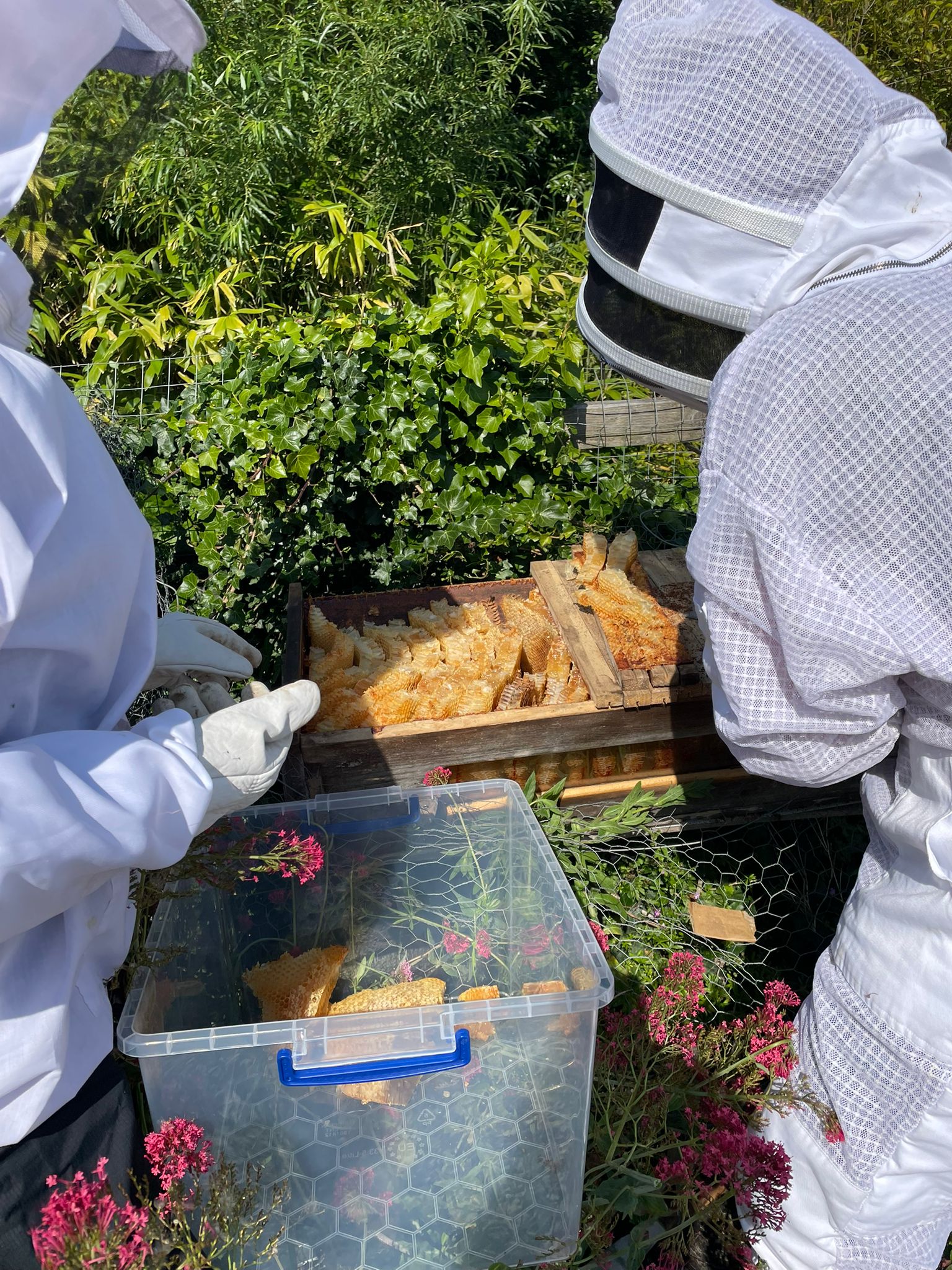
Honey harvest day
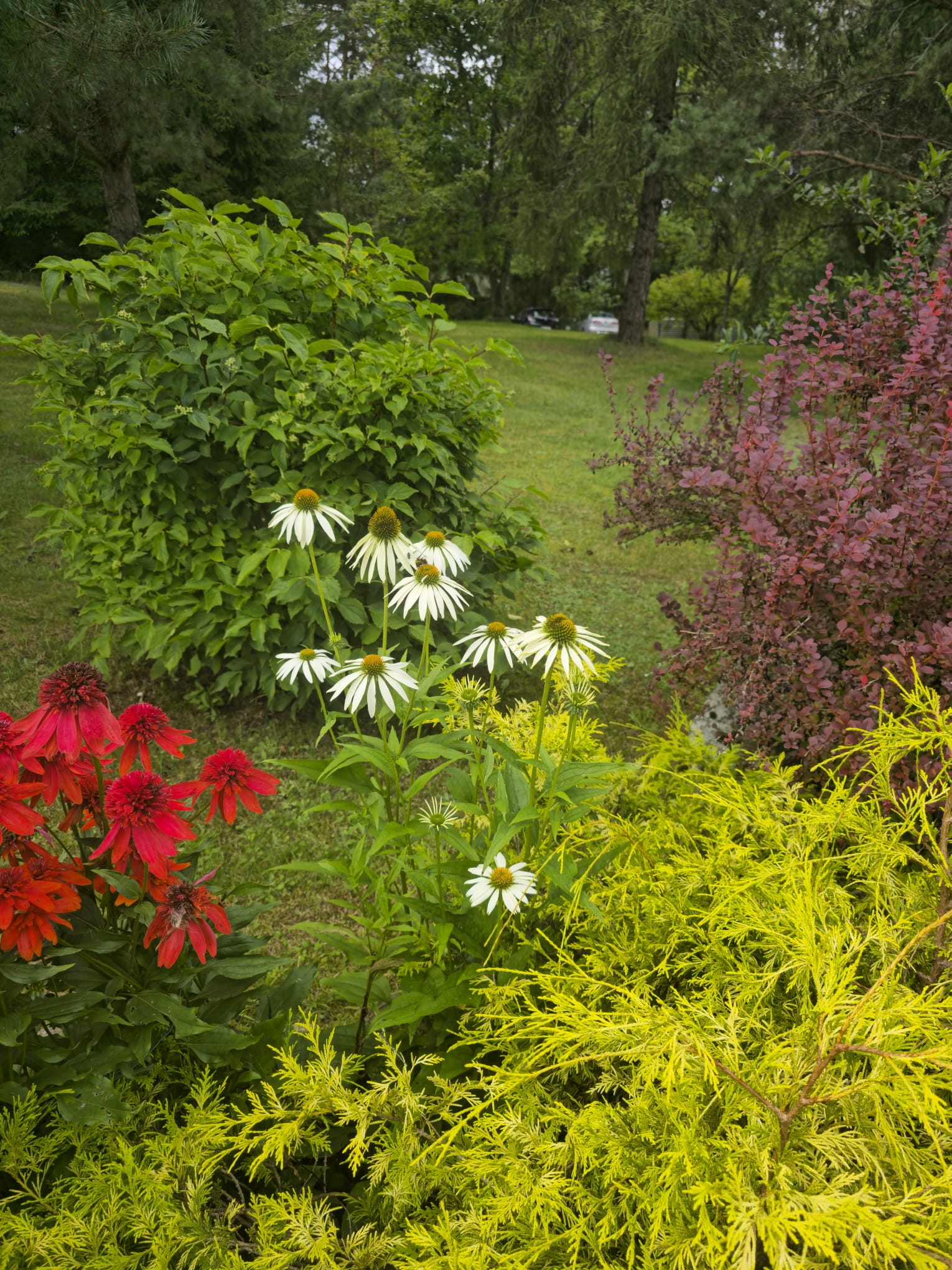
Echinacea garden
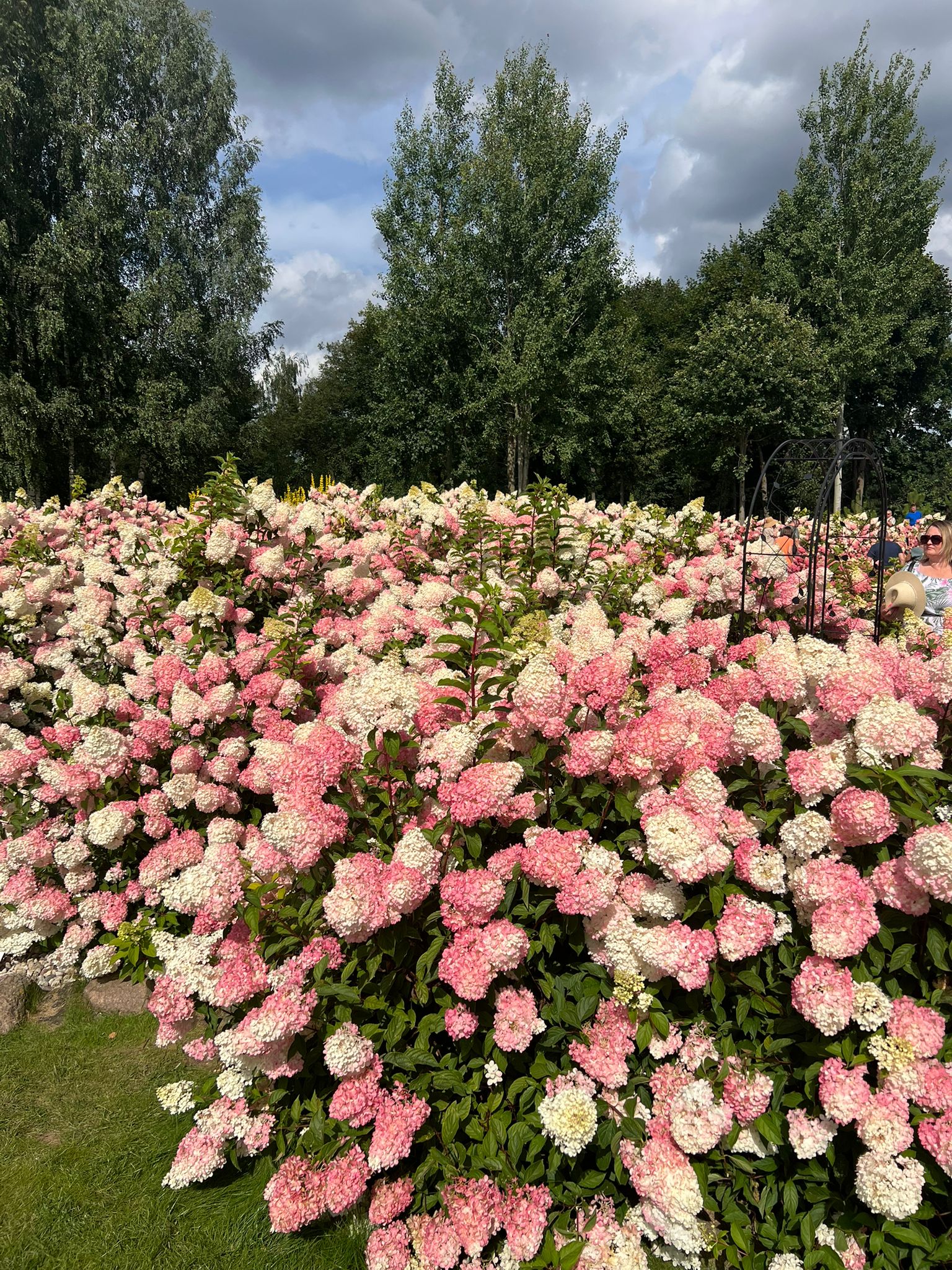
Hydrangea display
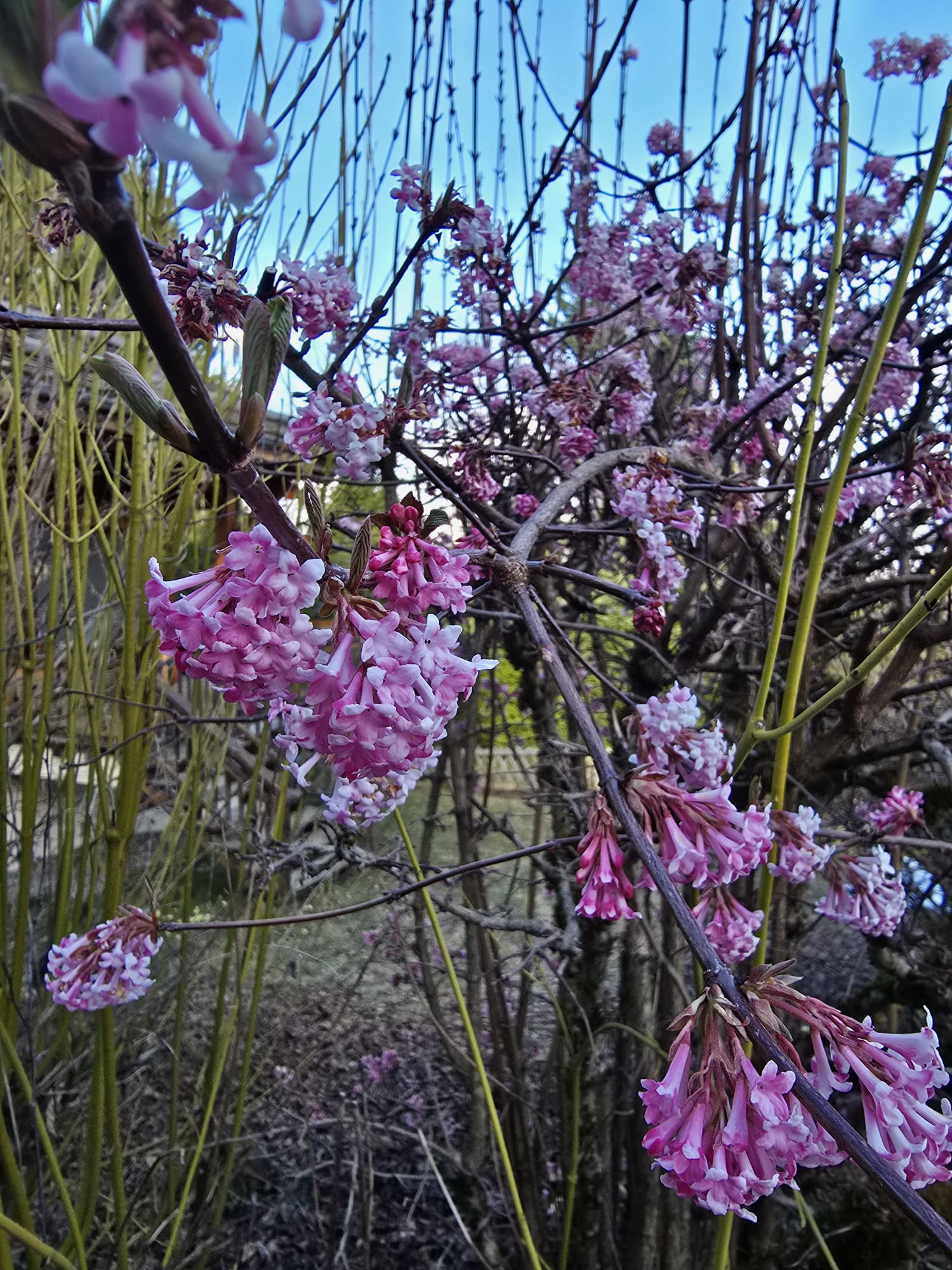
Spring blossom
Every Pollinator
Matters Here
270+ Species
of bee in Britain
A landscape where all pollinators can thrive.
Britain is home to over 270 species of bee alone — from bumblebees and mining bees to the honeybees we manage. Add hoverflies, butterflies, moths, and beetles, and the picture of pollination is vast and interconnected.
Our approach is simple: build the habitat first, support every pollinator that arrives, and manage our honeybee colonies responsibly within the landscape's carrying capacity. As our restored meadows mature, we hope to contribute to the conservation of Apis mellifera mellifera — the dark European honeybee with deep historical roots in these islands — through collaboration with specialist breeding programmes.
All Pollinators Welcome
Bumblebees, solitary bees, hoverflies, butterflies, moths — our meadows and hedgerows support the full spectrum of pollinating insects, not just honeybees.
Habitat First, Always
Wildflower-rich, pesticide-free environments are the foundation. Without habitat, no pollinator strategy can succeed.
Responsible Beekeeping
We manage hives thoughtfully, aware that honeybees can compete with wild pollinators for forage. Stocking density is guided by the habitat's carrying capacity.
Native Bee Aspiration
The dark European honeybee (Apis mellifera mellifera) has deep roots in these islands. As our habitats mature, we aspire to support conservation genetics work with specialist partners.
“We don't rank species. Every colony we support, every flower we plant — it matters to the whole system.”
— Alexandra, Founder & Director
Reconnecting children with
the living world.
Nature isn't something children should only see in zoos or on screens. It's real, it's present, and it's waiting. We go to them.
Mobile Bee Museum
We travel school-to-school bringing immersive VR experiences of life inside the hive — including the sounds, the light, and yes, the smell. Children learn about pollinators through total sensory immersion.
Free School Visits
Structured outdoor learning covering animal care, food growing, wildlife identification, and environmental stewardship. Designed to be inclusive and accessible — SEND children, looked-after children, families on low incomes. Free. Always.
Community Ecological Gardens
Public green spaces for relaxation, learning, and genuine connection with nature. For families, for children, for anyone experiencing isolation — because the natural world belongs to everyone.
500+
Children reached
Year 1 target
Free
Every visit, every time
No child left out
10+
Parishes in our area
South Northamptonshire
Partner with us.
Shape a future.
Put your name behind something real. Evidenced outcomes, named recognition, and data you can actually use in sustainability reporting.
Seed
£500/yr
A straightforward way for local businesses and sole traders to support active conservation work in their community.
- 🌿Named on our partner register
- 🌿Annual impact summary — what your contribution supported
- 🌿One staff invite to our annual field gathering
- 🌿Certificate of conservation partnership
Bloom
£2,500/yr
A named, visible, and verifiable connection to a managed pollinator habitat and local ecological restoration.
- 🌿Named recognition at a dedicated pollinator site
- 🌿Quarterly site monitoring updates — photos and field notes
- 🌿Invitation to one field day per year
- 🌿Annual impact report — species observed, habitat condition, activities logged
- 🌿Report formatted for internal CSR documentation
Grove
£5,000/yr
For companies with genuine sustainability commitments who need evidenced outcomes — named land, real data, and reporting you can actually stand behind.
- ✓Named habitat zone — wildflower meadow or hedgerow section
- ✓Ecological baseline + annual monitoring data: species lists, habitat condition, PoMS FIT Count records
- ✓Half-day structured volunteer session for up to 12 staff
- ✓Quarterly written site updates
- ✓Annual impact report — real monitoring data, formatted for ESG or sustainability reporting
- ✓Site visit and photo record of your named zone
Sanctuary
Bespoke
A multi-year conservation programme designed around your land, your planning context, and your reporting obligations.
- 🌿Custom-scoped programme — single or multi-site
- 🌿Professional ecological baseline survey and annual monitoring
- 🌿Habitat outcomes aligned with Biodiversity Net Gain principles (Statutory Biodiversity Metric methodology)
- 🌿Annual data pack suitable for inclusion in sustainability, ESG, or planning documentation
- 🌿Board-level relationship — annual review with founders
- 🌿Bespoke employee engagement programme
All partnerships include written impact reporting with real ecological data. As a CIC, every pound is asset-locked to our mission. For infrastructure, development, or BNG delivery enquiries, see below.
The species we're bringing home.
Every seed we sow is native and locally sourced from accredited British wildflower seed suppliers within our natural flora zone. We choose species for their ecological value and their role in the wider food web — not just for how they look.
Yellow Rattle
Keystone SpeciesRhinanthus minor
The meadow-maker. Semi-parasitic on grasses, reducing their dominance and allowing wildflowers to establish. Essential for any restoration.
Ox-Eye Daisy
Leucanthemum vulgare
Classic meadow flower. Blooms May–September. Supports hoverflies and beetles.
Field Scabious
Knautia arvensis
Lilac pincushion flowers beloved by bumblebees and butterflies.
Bird's-Foot Trefoil
Lotus corniculatus
Golden pea-flowers. Host plant for Common Blue butterfly larvae.
Red Clover
Trifolium pratense
Nitrogen-fixing. Essential forage for long-tongued bumblebees.
Yarrow
Achillea millefolium
Feathery leaves, flat white flower heads. Attracts parasitic wasps and ladybirds.
Meadow Buttercup
Ranunculus acris
Glossy golden petals. One of the first to bloom in restored meadows.
Common Knapweed
Centaurea nigra
Thistle-like purple heads. Top nectar source for butterflies and bees.
Wild Marjoram
Origanum vulgare
Aromatic herb. Magnet for Small Tortoiseshell and Painted Lady butterflies.
Cowslip
Primula veris
Spring-flowering. Indicator of ancient, unimproved grassland.
Devil's-Bit Scabious
Succisa pratensis
Late-season nectar. Sole food plant for the Marsh Fritillary butterfly.
All seed is sourced from accredited suppliers within the appropriate Natural England flora zone for South Northamptonshire, ensuring genetic compatibility with local plant communities.
Could we one day grow Britain's rarest orchid from seed?
The Lady's Slipper Orchid (Cypripedium calceolus) is Britain's rarest native plant — once widespread, now reduced to a single wild site in Yorkshire. It requires a specific mycorrhizal fungal partner to germinate, is pollinated exclusively by solitary bees of the genus Andrena, and can take up to 15 years to flower.
This isn't something we can do tomorrow. But it represents everything we believe in — patience, partnership with nature, and a refusal to accept extinction as inevitable. When the conditions are right and the proper licences are in place, we'd love to try.
“Fifteen years from seed to flower. We can be patient. The land's been waiting longer than that.”
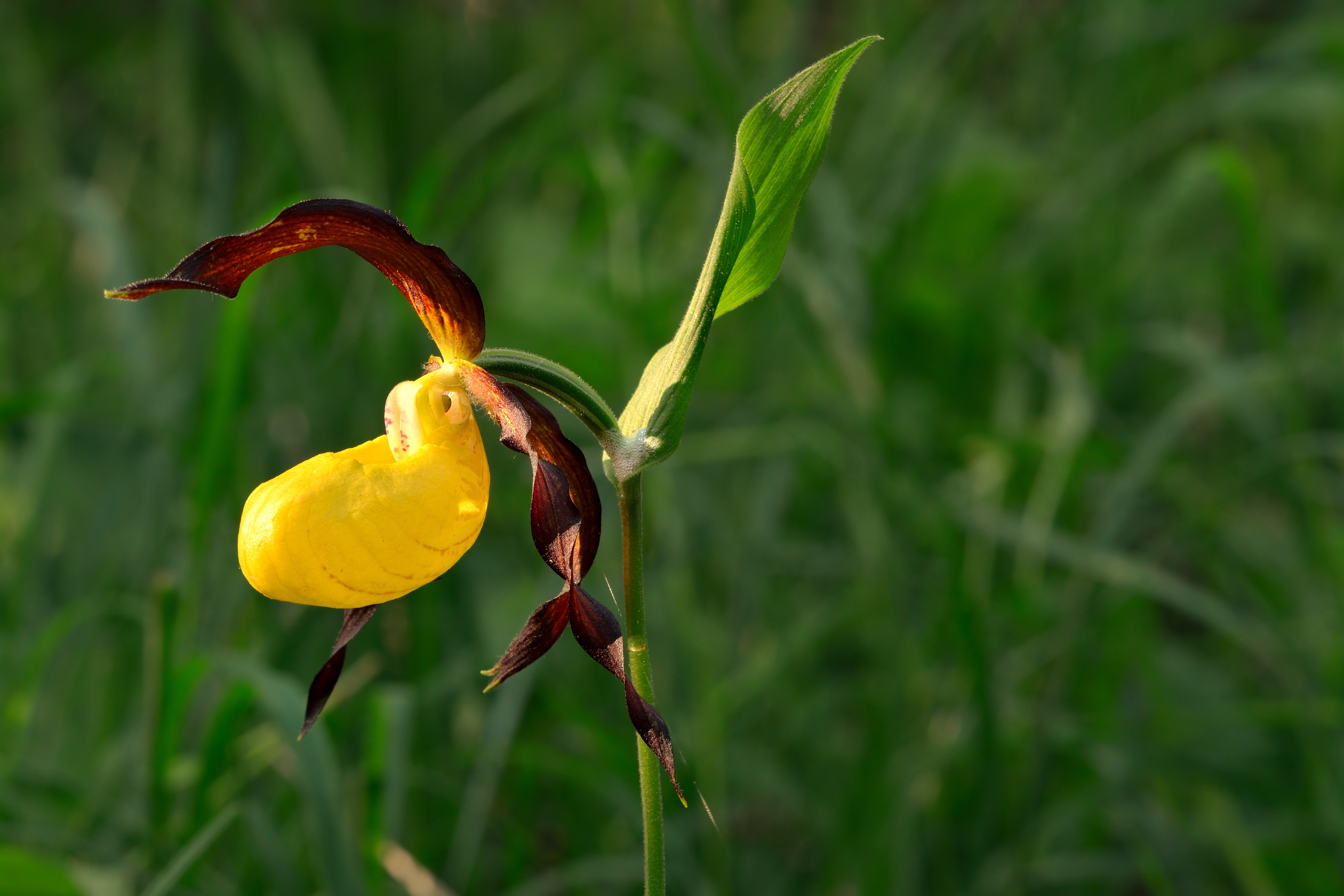
Photo: Ivar Leidus / CC BY-SA 3.0
Cypripedium
calceolus
South Northamptonshire &
the counties around it.
Our home is South Northamptonshire, but our work extends across the surrounding counties — connecting fragmented habitats through railway linesides, canal towpaths, and watercourse buffer zones. Everything we do aligns with the Local Nature Recovery Strategy (LNRS) for West Northamptonshire.
Counties We Operate In
Northamptonshire
Home base
South Northamptonshire forms our operational core — where our hives, meadows, and hedgerow networks are established.
Buckinghamshire
Adjacent county
Significant post-construction habitat restoration opportunity. Active infrastructure corridors with growing demand for evidenced BNG delivery.
Warwickshire
Adjacent county
Ancient woodland loss and habitat fragmentation across this county create a direct need for coordinated ecological recovery work.
Oxfordshire
Adjacent county
Borders South Northamptonshire to the southwest. Active infrastructure and development corridors with growing demand for evidenced BNG delivery.
Leicestershire
Adjacent county
Northern neighbour with strong agricultural landscape. Canal and watercourse corridors connect directly into our existing network.
Bedfordshire
Adjacent county
Road and rail infrastructure schemes create ongoing rewilding and buffer zone opportunities across this county.
Ecological Corridors
Railway Linesides
Linear habitats connecting fragmented ecosystems along disused and active rail corridors
Canal Towpaths
Waterside corridors linking urban areas to rural habitats
Watercourse Buffers
Riparian zones managed for biodiversity, sediment reduction, and phosphate interception
Hedgerow Networks
Ancient and restored hedgerows creating wildlife highways between habitats
Water Quality Outcomes
Sediment Reduction
Buffer strips and root systems trapping soil runoff before it reaches watercourses
Phosphate Interception
Wildflower meadows absorbing agricultural nutrient runoff, improving water quality downstream
Natural Flood Management
Restored soils and vegetation slowing surface water flow, reducing peak flood risk
6 Counties
South Northamptonshire and surrounding region
LNRS Aligned
Supporting Local Nature Recovery
Catchment Partnerships
Working with water stewardship goals
Theory of Change
From land access and expertise to measurable outcomes — this is how what we put in translates to lasting change on the ground.
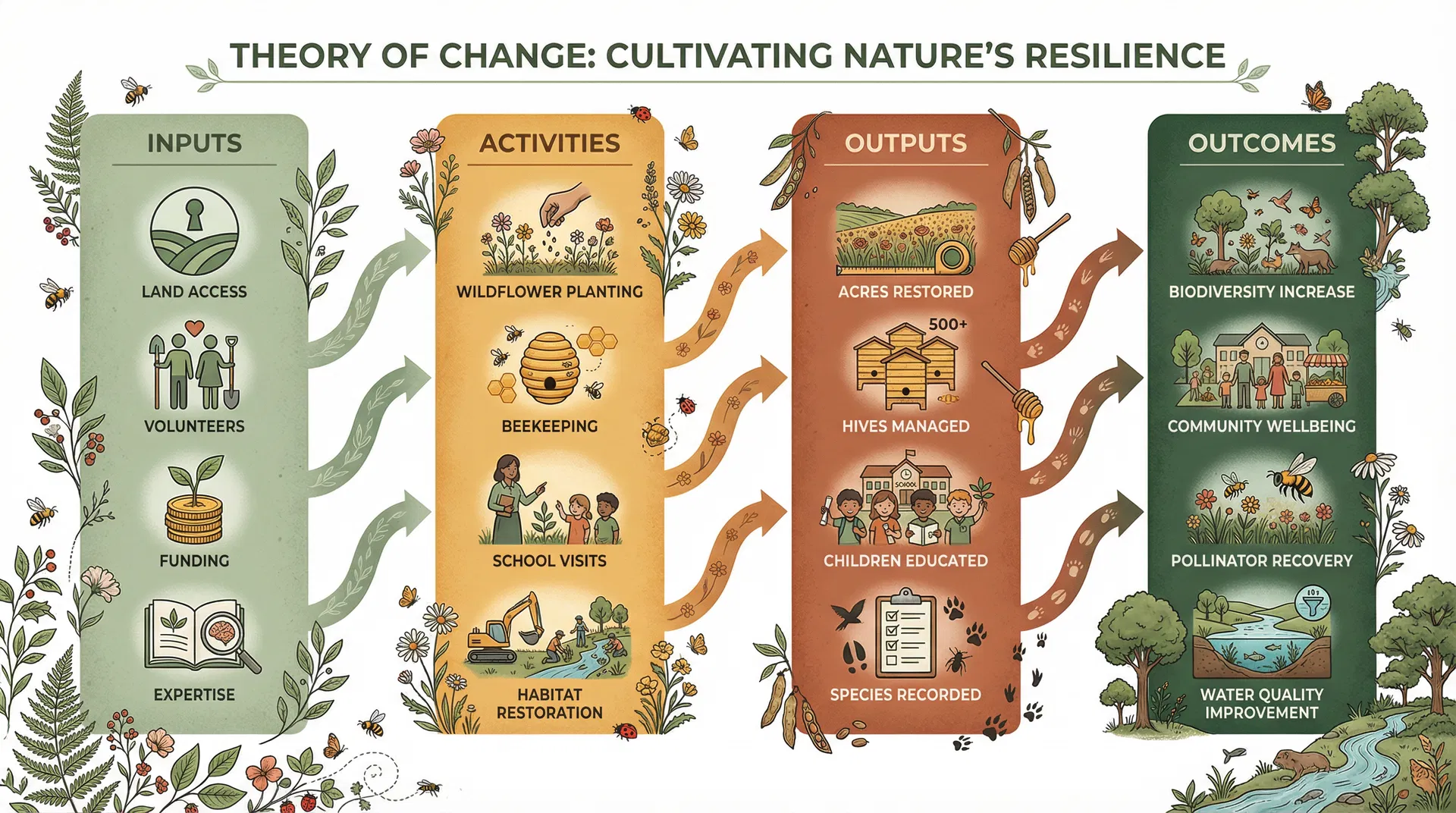
How We Measure Success
Biodiversity Increase
Species richness measured annually via PoMS FIT Counts and transect surveys
Pollinator Recovery
Baseline and annual pollinator abundance data across all managed sites
Community Wellbeing
Children reached, volunteer hours, course completions tracked per quarter
Water Quality Improvement
Sediment and phosphate levels monitored in partnership with water companies
The numbers behind the work.
0%
UK wildflower meadows lost
since 1930
0+
Parishes in our reach
South Northamptonshire
0
Ecological corridors
Rail, canal, water, hedgerow
0
Water company boundaries
Cross-boundary collaboration
0+
Children reached (target)
Year 1 ambition
0+
Native wildflower species
Locally sourced seed
Starting points, not endpoints. We measure what matters — species returning, children outdoors, communities connecting.
Invest in living infrastructure.
This isn't charity. It's infrastructure — living, measurable, and long-lasting. Every pound supports biodiversity, education, and community wellbeing directly.
Adopt a Hive
Sponsor a managed hive and receive annual honey, impact reports, and branded recognition.
Fund a Meadow
Underwrite the restoration of a wildflower meadow — named, mapped, and monitored.
Sponsor a School
Fund free visits for local schools. Every child deserves to learn outdoors.
Volunteer
Join planting days, monitoring walks, and community events. Bring your team.
Donate
Every pound goes directly to land, seed, and education. No corporate overheads.
Strategic Partnership
BNG credits, ESG reporting, multi-site programmes. Let's build something together.
Infrastructure & Development
Delivering Biodiversity Net Gain as a contracted service.
We work with infrastructure clients and developers as a named supply chain partner — delivering habitat creation, ecological corridor restoration, and community engagement programmes with full outcome monitoring. Aligned with the Statutory Biodiversity Metric and the West Northamptonshire Local Nature Recovery Strategy.
info@rewildbloom.co.uk · +44 330 133 1023
We'd love to hear from you.
Whether you want to volunteer, partner, donate, or just find out more — drop us a line. We reply to every message.
Direct Contact
About Our Structure
Rewild & Bloom is a Community Interest Company (CIC), registered in England. Our profits are asset-locked for community benefit — they cannot be distributed to shareholders.
Every pound invested goes directly to land restoration, education, and pollinator conservation. Our Community Interest Statement is filed at Companies House and available to view publicly.
For infrastructure and development partnerships, grant applications, or supply chain enquiries, please use the form and select the appropriate category.
We reply to every message.
Usually within 48 hours. If it's urgent, give us a call.